Garage Opener Light Blinking: A Troubleshooting Guide
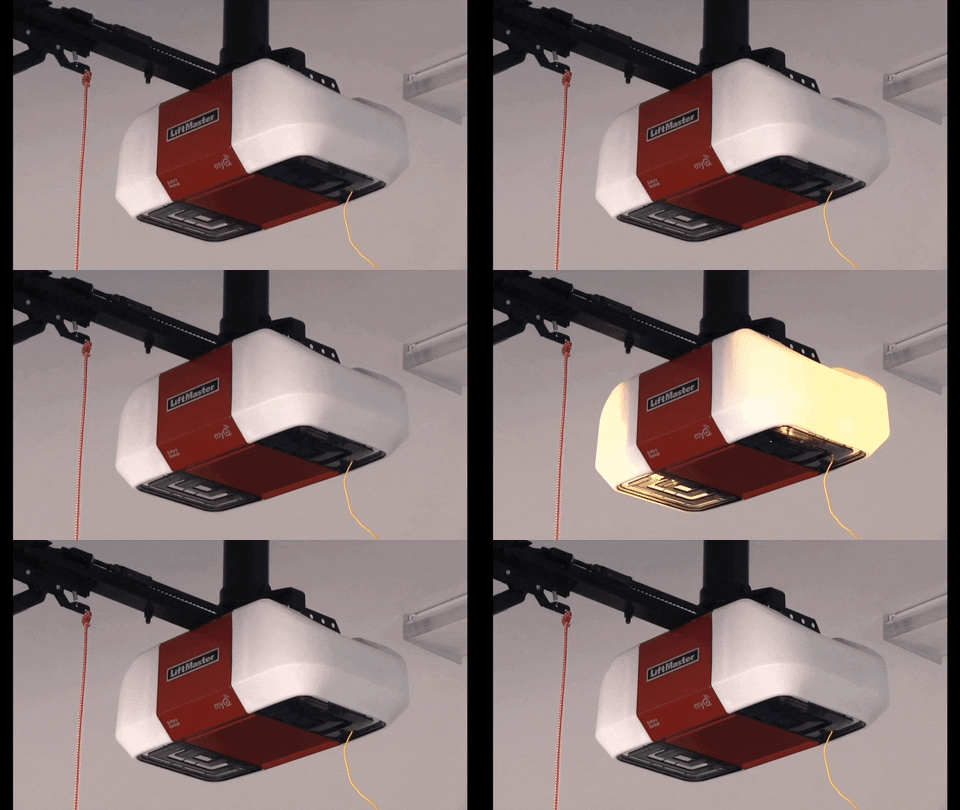
A blinking garage door opener light can be frustrating, especially when your garage door suddenly refuses to open or close properly. While the flashing light may seem like a minor issue, it’s often your opener’s way of alerting you to a problem that needs attention.
From sensor misalignment to wiring issues and worn-out components, several factors can cause your garage door opener light to blink. Understanding these warning signals can help you identify the problem quickly and determine whether a simple adjustment or professional repair is needed.
Garage Door Medics helps homeowners throughout Murrieta, Palm Desert, San Diego, and surrounding Southern California communities diagnose and repair garage door opener problems. Here’s what homeowners should know when a blinking light appears on their garage door system.
What Homeowners Need to Know About Blinking Garage Door Opener Lights
Modern garage door openers include built-in safety and diagnostic systems. When the opener detects an issue, it often communicates the problem through flashing lights.
Depending on the manufacturer and model, blinking patterns may indicate:
- Safety sensor problems
- Obstructions in the door’s path
- Travel limit issues
- Power supply disruptions
- Logic board malfunctions
- Motor overload conditions
In many cases, the blinking light serves as an early warning sign before a larger failure occurs.
Why Do Garage Door Opener Lights Blink?
Garage door openers are designed to prioritize safety. If the system detects anything that could prevent safe operation, it may stop the door and flash the opener light.
Some common reasons include:
- Misaligned photo-eye sensors
- Dirty safety sensors
- Blocked sensor beams
- Loose wiring connections
- Worn opener components
- Electrical interruptions
The specific cause often depends on when the blinking occurs and whether the garage door is still able to move.
Common Problems People Face When the Opener Light Is Blinking
Safety Sensors Are Misaligned
One of the most common causes of a blinking opener light is misaligned safety sensors.
Located near the bottom of the garage door tracks, these sensors create an invisible beam across the doorway. If the beam becomes interrupted or misaligned, the opener may refuse to close the door.
Signs of sensor issues include:
- Door starts closing and reverses
- Door won’t close with the remote
- Blinking opener light
- Flashing sensor indicator lights
Even a slight bump from a bicycle, trash can, or lawn equipment can knock sensors out of alignment.
Dirty Photo-Eye Sensors
Southern California homeowners often deal with dust accumulation, especially in areas like Palm Desert and inland communities.
Dust, dirt, spider webs, and debris can block the sensor lens and interfere with operation.
Try cleaning both sensor lenses with a soft cloth and testing the door again.
Something Is Blocking the Door’s Path
Garage door systems continuously monitor for obstructions.
Check for:
- Storage items near the tracks
- Debris on the floor
- Tools or equipment in the doorway
- Bent track sections
Even minor obstructions can trigger safety responses and cause blinking warning lights.
How to Troubleshoot a Blinking Garage Door Opener Light
Before calling for service, homeowners can perform several basic troubleshooting steps.
Step 1: Inspect the Safety Sensors
Look at both photo-eye sensors near the floor.
Verify that:
- Both sensors are facing each other
- Indicator lights are illuminated
- No objects are blocking the beam
- Mounting brackets are secure
If one sensor light is off or flickering, alignment may be required.
Step 2: Clean the Sensor Lenses
Dust and debris frequently interfere with garage door sensors.
Use a clean microfiber cloth to gently wipe both lenses.
Avoid using harsh cleaners that could damage the sensor housing.
Step 3: Check for Visible Obstructions
Walk the full length of the garage door tracks and inspect the opening area.
Remove:
- Boxes
- Bicycles
- Garden tools
- Leaves and debris
After clearing the area, test the door again.
Step 4: Reset the Garage Door Opener
Sometimes a simple reset resolves temporary electronic issues.
To reset most openers:
- Unplug the opener.
- Wait 60 seconds.
- Plug it back in.
- Test operation.
If the blinking persists, additional diagnosis may be needed.
Step 5: Test the Wall Control
If the remote doesn’t work but the wall button does, the issue may involve:
- Remote batteries
- Remote programming
- Signal interference
This can help narrow down the source of the problem.
What Different Blinking Patterns May Mean
Many garage door opener manufacturers use specific flash codes.
Common examples include:
Continuous Blinking
Often indicates sensor-related problems.
Rapid Flashing
May point to electrical issues or interrupted communication between components.
Multiple Flash Sequences
Some openers flash a specific number of times to identify a fault code.
Consult your owner’s manual for model-specific interpretations.
If you’re unsure what the flashing pattern means, a professional inspection can save time and frustration.
How Southern California Conditions Can Affect Garage Door Openers
Local environmental factors often contribute to garage door opener issues.
Murrieta and Inland Heat
High summer temperatures can:
- Overheat opener motors
- Accelerate wear on electronics
- Cause sensor components to expand
Palm Desert Dust Exposure
Desert conditions frequently lead to:
- Dirty sensor lenses
- Dust buildup inside opener housings
- Increased maintenance requirements
San Diego Coastal Air
Salt air and humidity can contribute to:
- Corrosion on wiring connections
- Electrical component deterioration
- Reduced lifespan of opener systems
Routine maintenance helps protect garage door equipment from these regional challenges.
How to Know When You Need Professional Help
Some blinking light issues are simple fixes. Others indicate mechanical or electrical failures that require professional service.
Contact Garage Door Medics if:
- The opener continues blinking after troubleshooting
- The garage door won’t close completely
- The door reverses unexpectedly
- You hear grinding or clicking noises
- The opener motor runs but the door doesn’t move
- Electrical components appear damaged
Prompt repairs can prevent additional damage and help avoid costly replacements.
Why Regular Garage Door Maintenance Matters
Many opener problems develop gradually over time.
Preventive maintenance helps identify:
- Sensor alignment issues
- Worn gears and belts
- Loose hardware
- Electrical concerns
- Travel limit adjustments
Regular inspections can improve reliability and extend the life of your garage door system.
Maintenance Checklist for Homeowners
Perform these checks every few months:
- Clean safety sensors
- Inspect tracks for debris
- Test auto-reverse functions
- Listen for unusual noises
- Check opener mounting hardware
- Lubricate moving components as recommended
A simple maintenance routine can prevent many common opener failures.
Why Homeowners Trust Garage Door Medics
Since 1990, Garage Door Medics has provided fast, dependable garage door solutions throughout Southern California.
Our experienced technicians specialize in:
- Garage door opener repair
- Garage door opener installation
- Garage door repair
- Preventive maintenance
- Emergency garage door services
- Garage door replacement
As the “first responders” for garage door problems, we understand the importance of quick service and reliable repairs.
Need emergency garage door repair? Contact the Medics now.
Frequently Asked Questions About Blinking Garage Door Opener Lights
-
Why is my garage door opener light blinking and the door won’t close?
Most systems reconnect by pulling the emergency release cord back into position and operating the opener through a complete cycle.
-
Can dirty sensors cause a blinking opener light?
Yes.
Dust, dirt, and debris can interfere with the sensor beam and trigger blinking warning lights.
-
Will unplugging the opener reset the system?
In many cases, unplugging the opener for one minute can clear temporary electronic issues.
-
Should I replace my garage door opener if it keeps blinking?
Not necessarily.
A professional inspection can determine whether repair or replacement is the most cost-effective solution.
-
Should I schedule maintenance after repeated power outages?
Yes.
Regular inspections help identify issues before they become expensive repairs and ensure your opener system remains reliable.
Get Expert Garage Door Opener Repair Today
A blinking garage door opener light is often your system’s way of telling you something isn’t working correctly. While some issues can be resolved with simple troubleshooting, persistent warning lights may indicate larger mechanical or electrical problems.
Don’t wait until your garage door stops working completely. Homeowners across Southern California trust Garage Door Medics for fast, reliable garage door solutions.
Call Garage Door Medics today for expert opener diagnostics, repairs, and maintenance services.

$200 off
a new Automatic Gate Entry System
Limited time offer. Cannot combine with other offers. Valid until 12/31/2026
REDEEM
$50 off
any new Garage Door Opener
Limited time offer. Cannot combine with other offers. Valid until 12/31/2026
REDEEM
Get $100 off
a Single Door or $200 off a Double Door
Limited time offer. Cannot combine with other offers. Valid until 12/31/2026
REDEEM
$50 Off
Weather Seal Replacement with Any Repair
*Universal bottom rubber retainer only. Additional costs may apply if retainer replacement is required
Limited time offer. Cannot combine with other offers. Valid until 12/31/2026
REDEEM
$0
Service Call with Any Repair
Limited time offer. Cannot combine with other offers. Valid until 12/31/2026
REDEEM
$49
Lube and Tune with 24-Point Safety Inspection ($180 value)
Limited time offer. Cannot combine with other offers. Valid until 12/31/2026
REDEEM
Free
Up to $1,000 in additional value
Excludes polyurethane garage doors
Limited time offer. Cannot combine with other offers. Valid until 12/31/2026
REDEEM
FREE
Tune Up with Service
Limited time offer. Cannot combine with other offers. Valid until 12/31/2026
REDEEM
$99
Roller Replacement
Limited time offer. Cannot combine with other offers. Valid until 12/31/2026
redeem
As low as $39 per month
a new Garage Door
Limited time offer. Cannot combine with other offers. Valid until 12/31/2026
redeem
Free
Keypad or Remote
with New Opener Installation ($149 value)
Limited time offer. Cannot combine with other offers. Valid until 12/31/2026
redeemWhat Are Customers Are Saying
We had service rep., Hunter DePolo. He was extremely efficient, knowledgeable, professional, and courteous. I recommended him to two of My neighbors. I highly recommend him. He gets 10 out of 10! It’s not every day you have people come to your house with such good Customer Service. The work he did was excellent!
Show More
Linda McCarthy
Garage medics did a great job repairing two items on my garage door. Matthew (the technician) explained all the work that needed to get done with the estimate. The work was done very professionally and completed in a timely manner.
Show More
Lorna Sheedlo
This was among the best experience I've ever had with a company. Their website says that the customer is number one. That means great communication, on time, letting me know they were on their way so I could be at work and then go home in time to meet them. Showing deep knowledge and a sincere desire to help me put my garage door back better than it ever was. Everything went great! Lance and I'm sure the rest of the technicians on their team are truly garage door medics of the highest skill.
Show More
Randy Chiurazzi
Rick helped me 3 years ago, so I was happy to see him again! He's very knowledgeable and personable, you're lucky to have him as an employee.
Show More
William Buckley
Lance was helpful and friendly, but also so incredibly knowledgeable. Garage Medics are the best. Thanks again.
Show More
Caroline Matthews
Hunter was very professional and my father and I were given a lot of information on the garage door. Hope to work with him again in the future
Show More
Sandra Adams
Highly Recommend Rick! I cannot say enough great things about Rick! From start to finish, he was absolutely amazing! He was extremely honest, professional, knowledgeable, and incredibly quick. It’s not every day you come across someone who genuinely knows what they’re doing and takes pride in their work. Rick was able to identify the problem with my garage door right away and get everything taken care of in no time! He was very thorough, explained everything clearly, and made the entire process completely stress-free. What I appreciated most was his honesty and integrity. He wasn’t trying to upsell unnecessary repairs or take advantage of the situation. He genuinely wanted to get the job done right! His professionalism, efficiency, and attention to detail truly exceeded my expectations. You can tell he has years of experience and genuinely cares about his customers. Finding someone who is reliable, trustworthy, and skilled is priceless! If you need garage door repairs, Rick is absolutely your guy! I would recommend him to anyone without hesitation. I will definitely be using him again for any future garage door needs! Thank you, Rick, for your outstanding customer service, honesty, and exceptional work! You deserve more than five stars!
Show More
Brandi Osbun
Rick is awesome. Always informative about the condition of my garage door. Leaves me with peace of mind.
Show More
Froy Men
Lucas couldn’t have been better. My garage door fell on my car while I was in it.The door was not only ruined but part of the top of the car, the fin shaped antenna, was torn partially off. I, understandably, was quite upset. He was incredibly patient and understanding with my dilemma. He gave me many options for what we could do about the door after he had physically bent it back into shape. He explained that if I replaced the door, I would have to replace the motor because of the requirements of Sacramento. He used masking tape to put the fin back in but strongly, encouraged me to get it fixed professionally immediately by somebody I trusted. If water got in — and we are expecting rain -– it could cause untold damage. In no way was he condescending. He included me in all of the decisions. He is a model for a service tech. Carole Spencer
Show More
Carole Spencer
We can always count on Lance to figure out the issue, get it solved, and make the process pleasant and productive. He’s a great Go To!
Show More
Jacqueline A. Silverman
Lance was our technician. He did a wonderful job – arrived on time and did all of the work quickly and our new garage opener is working great. He was a pleasure to work with and we highly recommend his services.
Show More
Catherine Dixon
Did a basic tune up. Tightened the chain and tightened the bolts on the garage door sections. Had to replace two nuts. Also, lubercated the joints.kept me informed of the process and how to help maintain the garage door sections he was very friendly and informative.
Show More
Scott Green
Came out to service my garage door the same day I called. Technician Alfonso was prompt and very courteous. He assessed my needs and showed me my options. Once decided, he said it would take 3-4 hours. Which I was ok with. Work was done in about 3 hours and we and very pleased with our new garage door opener. Alphonso explained the operation of the new opener to me. The only thing I was not happy with is that a part of my water softener was broken. I was able to tape it back together. Over all I am bery happy with the work that was done. Not sure about cost but I have no comparisons to go by.
Show More
wesley barnes
Hunter was great! My garage door remote had stopped working and I’d had no luck programming a universal replacement. Luckily, he had the same remote and got everything working again in no time. Quick, friendly service. Highly recommend!
Show More
Cathrine Aivati
Tell them to send to Alfonso! He gets it done!!
Show More
Anthony Ricard