
Insulated Garage Door Installation in Southern California & Dallas
If your garage gets too hot, too cold, or too noisy, the problem may not be your garage—it may be your garage door. Insulated garage doors are designed to improve temperature control, reduce noise, and protect both your garage and your home from outside conditions.
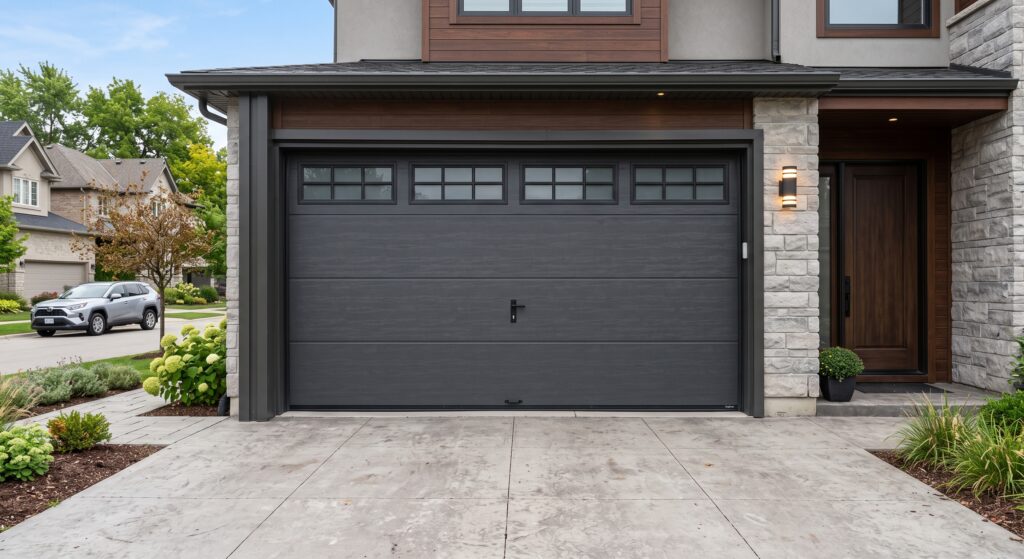
At GD Medics, we install insulated garage doors for homeowners across Southern California and the Dallas–Fort Worth area. Whether you’re upgrading an older door or improving energy efficiency, our team helps you choose a system built for comfort, performance, and long-term durability.
Why Choose an Insulated Garage Door?
Better Temperature Control
Insulated garage doors help regulate temperatures inside your garage by reducing heat gain in the summer and heat loss in the winter.
This is especially important for attached garages, homes with living space above the garage, and garages used as workspaces or gyms.
Improved Energy Efficiency
By limiting temperature transfer, insulated doors can reduce the workload on your HVAC system—especially in homes where the garage shares walls with living spaces.
Quieter Operation
Insulated doors are typically thicker and more solid, which reduces vibration and noise during operation.
This is particularly beneficial for bedrooms located above or near the garage and homes with attached garages.
Increased Strength and Durability
Multi-layer insulated doors are more rigid than single-layer doors. This added strength helps them resist dents, handle daily wear, and garage door maintenance alignment over time.

Pros and Cons of Insulated Garage Doors
Insulated doors offer clear performance benefits, but they may not be necessary in every situation.
Pros
- Improved temperature control
- Increased energy efficiency
- Quieter operation
- Stronger construction
- Better long-term performance
- Helps protect stored items from extreme heat
Cons
- Higher upfront cost than non-insulated doors
- Slightly heavier, requiring proper hardware and installation
- May not be necessary for detached garages
For most homeowners—especially those with attached garages—the benefits outweigh the added cost.
Types of Insulated Garage Doors
Insulation can be applied to different materials and configurations.
Steel Insulated Garage Doors
The most common option, combining durability with energy efficiency.
These doors typically feature:
- Double- or triple-layer construction
- Steel exterior panels
- Insulated core material
Insulation Materials
Different insulation types affect performance.
Polystyrene Insulation
- Rigid foam panels
- Lower cost
- Moderate insulation value
Polyurethane Insulation
- Injected foam that expands to fill space
- Higher insulation value
- Stronger, more rigid construction
Polyurethane insulation is generally the higher-performance option.
R-Value Explained
R-value measures a door’s resistance to heat flow. Higher R-values indicate better insulation performance.
Choosing the right R-value depends on:
- Climate
- Garage usage
- Whether the garage is attached or detached

SoCal vs. DFW: Why Insulation Matters
Climate plays a major role in whether an insulated garage door is worth the investment.
Southern California Considerations
- Warm temperatures and strong sun exposure
- Coastal and inland temperature variation
- Garages often used as functional spaces
Insulated doors help reduce heat buildup and improve comfort—especially in inland areas.
Dallas–Fort Worth Considerations
- Extreme summer heat
- Large temperature swings
- Higher demand on HVAC systems
In DFW, insulated garage doors are strongly recommended for most homes. They help reduce heat transfer and improve overall energy efficiency.
Insulated vs. Non-Insulated Garage Doors
Understanding the difference helps clarify when insulation is worth it.
Non-Insulated Doors
- Lower cost
- Lightweight
- Suitable for detached garages
- Minimal temperature control
Insulated Doors
- Higher cost but better long-term value
- Stronger construction
- Better temperature regulation
- Quieter operation
For attached garages, insulated doors are typically the better choice.
When to Choose an Insulated Garage Door
An insulated garage door is a strong choice if:
- Your garage is attached to your home
- You use your garage as a workspace or living area
- You want to reduce noise
- You want better energy efficiency
- You live in a hot or variable climate
What You’re Getting with a Professional Installation
Our installation process includes:
System Evaluation
We assess your current setup and recommend the right door configuration.
Door Selection
We help you choose the right insulation type, R-value, and material.
Installation
Our technicians install all components, including tracks, springs, and hardware.
Sealing and Alignment
We ensure proper sealing to prevent air gaps and improve efficiency.
Safety Testing
We test the system for smooth, safe operation.
Final Walkthrough
We confirm smooth operation and answer any questions about maintenance and use.
Insulated Doors vs. Other Garage Door Types
Insulation can be applied across multiple materials. Insulated steel offers the best balance of durability and performance, insulated wood provides a premium look with added efficiency, and insulated glass gives limited insulation, though this improves with upgraded glass. Insulation is less about style and more about performance.
How Insulation Protects Your Garage
Beyond comfort, insulation helps protect vehicles from extreme temperatures, stored items and tools, electronics and equipment, and flooring and interior finishes. It also reduces strain on garage door components by improving overall system stability.
Schedule Insulated Garage Door Installation
To learn more about your options or to schedule installation, visit our residential garage doors.
Our team can help you choose the right insulated garage door for your home and climate.
Insulated Garage Door FAQs
-
Are insulated garage doors worth it?
Yes—especially for attached garages or homes in hot climates, where they improve comfort and efficiency.
-
What R-value should I choose?
It depends on your climate and usage, but higher R-values provide better insulation.
-
Do insulated doors reduce noise?
Yes, they reduce vibration and make garage door operation quieter.
-
Are insulated doors heavier?
Yes, but proper installation ensures smooth and safe operation.
-
Can I add insulation to my existing door?
In some cases, yes—but full replacement often provides better performance.
-
Do insulated doors help in hot climates?
Yes, they significantly reduce heat transfer and improve interior comfort.

$50 off
a New Garage Door Opener
Limited time offer. Cannot combine with other offers. Valid until 10/01/2026
REDEEM
$100 off
a New Garage Door
Limited time offer. Cannot combine with other offers. Valid until 10/01/2026
REDEEM
$0
Service Call with Any Repair
Limited time offer. Cannot combine with other offers. Valid until 10/01/2026
REDEEMWhat Are Customers Are Saying
We were happy with prompt dispatching of Serviceman -Gene Arnell to repair our garage door. Gene did a fine job but my biggest concern was that we were not informed of your two spring special. We ended up paying a total of $500 for installing two spring replacement, new rod that holds the springs and a bracket for the one car garage door, which Gene recommended we should have it replaced to avoid future repairs. I had texted for help in my neighborhood and it seems that a garage door specialist lives in our neighborhood, and his cost would have been lower. I look for integrity, good workmanship & reasonable pricing for any repair service at my house. Everyone I talked to after the repairs mentioned that the cost was steep for the work involved. We had no alternative but to get the repairs done immediately since our cars were locked in the garage so I feel I should bring this to your attention.
Show More
Rohinton Panthaky
Garage Door Medics are awesome! From the minute I picked up the phone to when the technician arrived I was fully informed and taken care of. They told me that they would send an email confirmation of my appointment...and they did!. They told me my technician would call a half hour ahead of when he would arrive...and he did! They told me they could make my door a whole quieter and smoother...and it is! They are a five star company all the way. I would highly recommend them to anyone I know and anyone reading this. btw - They actually fixed my door better than new. I bought a brand new house and dealt with the "pterodactyl" (that's what I used to call my garage door) for six years and then I called them up and it is nearly silent now. It turns out the builder who put my door in used a low grade subcontractor who did a bad install on my home and all of my neighbors. I have referred the Garage Door Medics to all of my neighbors. I can hardly walk my dogs without a neighbor seeing me and thanking me for that referral...You’re welcome!
Show More
Noah Taylor
great service. friendly, knowledge service man.on time arrival. reasonable price.
Show More
Ursula S. Moede
I had a torsion spring break on my garage door. Contacted Garage Door Medics through their website and setup an appointment via a timely email exchange. Jeff arrived first-thing Saturday morning to do the repair. A thorough inspection, professional service, and answered all of my questions. Jeff even attempted to use 2 less springs to reduce cost. Will certainly use them again in the future.
Show More
Sean Gardinier
Below you will find a review I wrote a few weeks ago based on the UT Deal and my experience with their service. A few days after I was contacted by the company's marketing manager and he admitted it was totally his fault for not indicating they can't service a "home owner style door" or technically called a "tension spring door". I was surprised to be contacted in result of my review but the representative was very understanding and that they should have put the verbiage on their advertisement in the first place. He indicated that all future advertising will say they what they can and can’t service. To help remedy the situation he gave me some reimbursement options to ensure satisfactory and to retain any future business. I must say this would not have happened if it was an under par company. Any ordinary Joe Smoe company would just have over looked the review and blown it off. Their type of service definitely says something about the type of company they really are how they do business. They really want to make sure ALL of their customers are happy. Based on my final experience they stand up to their reputation as a leader in their marketplace. I would recommend them in the future based on their great customer service. --------------------------------------------------------------------------------------------------------------------------- I paid $39 for a checkup and service promotion offer they had through UT San Diego. The value was said to be worth $89. The guy came out to inspect my door and said he had been in the garage door business for 17 years. Upon his inspection he indicated I had a "homeowner" style door and to save up $815 for a new one. He sprayed a little silicon on the rollers that took no longer than 3 minutes and said that's all he could do. There was no improvement from his services, the door works EXACTLY the same as before he came out. I feel like they basically robbed me for $39 and I would not recommend their services to anyone. If they are going to put out promos like this they need to indicate they can't help anyone with a "homeowner" style door so other people aren't taken like I was.
Show More
Jon Austin
Overall service was excellent. We had a broken garage door torsion spring. Jordan arrived within a few hours of our call. He replaced both springs and lubricated the entire garage door. He also replaced a couple of broken hinges. A little pricey at $400 but the last set of springs lasted 10 years.
Show More
John Helfrick
One day our garage door remote openers would not work. So, I called Garage Door Mechanics. They said they could be there the next day between 10 am and 2 pm. About 10 am Jacob called and said he was on his way. He fixed the remotes and checked the opener to make sure it was working properly. He made a few adjustments and lubed the gear and was done. I am completely satisfied with Jacob's work. He was courteous and very professional. I would recommend Garage Door Mechanics to anyone. Thanks Jacob. Good job!!
Show More
Richard Hunt
Awesome Company! We have done business with GDM on 2 occasions so far and each time the technicians have been extremely knowledgeable, courteous and are not in it for the money, but for customer satisfaction. A satisfied customer is a repeat customer - that's why we won't be calling any other company for our garage door needs! Thanks Jeff and Joel, as well as the whole GDM company!
Show More
V Snyder
I took advantage of a timely garage door "tune-up" on offer through Angie's list. The technician, Joel, very quickly assessed two broken hinges and offered to order them and service the door when the parts came in. As promised, I received a follow-up call to schedule service. Joel explained what he was doing to service the door and why, and, further, what I could do to keep the door operating optimally. I really liked that. I will definitely use Garage Medic for any future service work and happily refer them to my friends and neighbors.
Show More
Jean M. Carlo
The Garage Door Medics were prompt, kind, and efficient. The took care of our garage door expertly. I would recommend them to everyone! Great Job.
Show More
Rebecca Gilleran
These are the guys you want to call when you have a garage door problem. Fast, courteous, knowledgeable, and just plain cool. A really top-notch local business.
Show More
Christopher Murphy
Eric Murphy was very professional and went beyond the call of duty! I was very satisfied with my experience and I would highly recommend your business to my family and friends! Thank you!
Show More
Karen Bucher
Our garage door needed a tune up, as it had been a while. The tech noticed that the springs that were on the door weren't correct, and was able to get the right springs installed as part of the tune-up. They showed up on time, got the work done quickly and our door is much happier.
Show More
Tom Perrine
Garage Door Medics did a great, quality and on time job. We are fully satisfied as customer of Garage Door Medics....Thank you and keep up the good work
Show More
Mac Elsayeh
Did a tune up. I didn't think it would do much, but boy did it ever, much quieter. He showed up on time. The only drawback was that we were scheduled twice and a second person was going to come out when we were already seen.
Show More
Tom Dean
Areas We Serve
We’re here to bring fast, reliable garage door service to homeowners and businesses in the communities we proudly serve.